Digital KYC and Onboarding at Scale: The SaaS Advantage for Banks and NBFCs
Introduction
Customer onboarding is the first impression a bank or NBFC makes. But over the years, it has been among the most frustrating experiences by both borrowers and institutions alike; pages of paperwork, visits to the branch, paperwork verification, and days without an account or loan being activated.
This experience is now being completely transformed using SaaS-based Digital KYC platforms. Banks and NBFCs are now able to add customers within minutes, identify in real time and stay fully regulated without a single physical document.
The Problem with Traditional KYC Onboarding
The cost of manual KYC is high to operate. Field agents collect physical documents, back-office teams manually verify them, and compliance officers review each case individually. The outcome is foreseeable high costs, lengthy turnaround, inconsistent data quality, and high drop-off rates prior to onboarding is even finished.
In the case of NBFCs in Tier 2 and Tier 3 markets, it is even more challenging. Branch-based onboarding is neither scalable nor cost-effective to reach underserved borrowers.
The side effects of the old onboarding are:
- Customer drop-offs of up to 40% during lengthy manual processes
- High cost per onboarding due to field agent and back-office involvement
- Compliance gaps from inconsistent document collection and verification
- Fraud exposure from inadequate identity verification at the point of onboarding
How SaaS Platforms Are Solving This
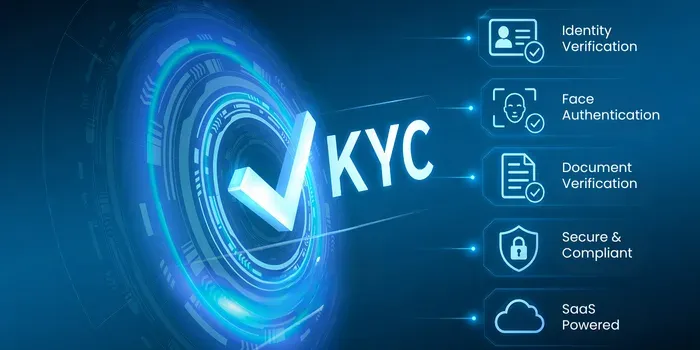
SaaS KYC models today integrate different verification technologies in an API-based onboarding process that can scale up and be deployed by banks and NBFCs within a short timeframe without substantial IT expenditure.
- eKYC based on Aadhaar allows real-time identification verification with the authentication infrastructure of UIDAI. OTP or biometric identification takes the customer a minute or two to verify themselves, which makes submission of physical documents a thing of the past.
- Video KYC (V-KYC) enables banks to carry out face-to-face verification that is mandatory by RBI remotely via a live video call. Onboarding the customers can be done anywhere in India without the need of visiting a branch, which is especially effective in the case of geographically dispersed NBFCs.
- AI-Powered Document Verification is an optical character recognition and machine learning-based system that in real-time extracts, validates, and cross-checks information on PAN cards, passports, driving licences, utility bills and so forth, cutting down on manual inspection to near zero.
- The Face Match and Liveness Detection technology will help verify that the individual presenting documentation at the onboarding stage is who they actually say they are, and will greatly lower the number of attempts at identity fraud and impersonation.
- Bureau and Database Integrations allow platforms to pull CIBIL scores, CKYC records, and negative list checks automatically during onboarding, giving credit teams a complete borrower profile before the first interaction is even complete.
What Banks and NBFCs need to focus on
In choosing a SaaS KYC provider, institutions can consider RBI and UIDAI compliance certificates, support of V-KYC and eKYC modules, the depth of bureau and CKYC integration, support of vernacular market multilingual interface, and compliance of data residency under India DPDP Act 2023.
Conclusion
Digital KYC is no longer a luxury good - it is the cornerstone of competitive, scalable and compliant customer onboarding in banks and NBFCs in 2026. It is now possible to onboard customers more cheaply, securely and faster than it has ever been with SaaS platforms.
Banks and NBFCs investing in SaaS-based onboarding today will create the customer base, operational efficiency, and compliance posture necessary to be a leader tomorrow.