Digital KYC vs. Traditional KYC: What Financial Institutions Must Know
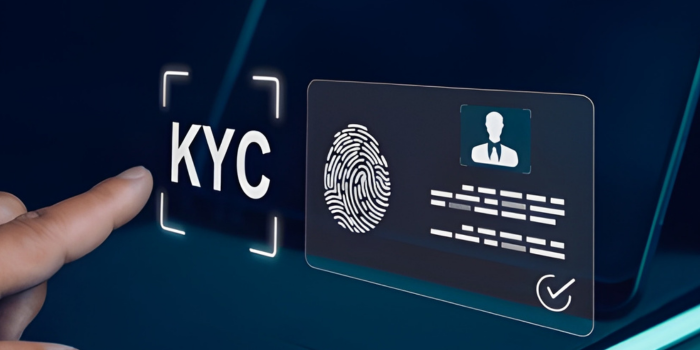
Know Your Customer (KYC) compliance is a key regulatory concern in the fast-growing sector of the financial industry, where banks, fintechs, and other financial institutions must fulfill their duty of managing regulatory risk and compliance with legal and regulatory frameworks. As digital technology emerges, the old KYC procedure is more and more being substituted (at least complemented) with digital KYC solutions (e-KYC). Knowing the differences between traditional KYC and digital KYC, and their consequences, is crucial in the quest by financial institutions to be efficient, compliant, and provide customers with an improved experience.
Understanding Traditional KYC
Traditional KYC is simply the process of manual verification of customers by providing after-copying records like passports, identity cards, utility bills or bank statements. The financial institution then verifies these documents, which can be done through a visit or through post. Traditional KYC has been regarded as a safe and trustworthy means of deterring financial fraud and money laundering as well as identity theft.
However, the traditional process is fraught with challenges:
- Time-Intensive : It may take days or even weeks to verify manually, which decelerates the process of onboarding customers.
- Expensive Operations : It is operationally expensive to handle, store and verify physical documents.
- Poor Accessibility : Customers residing in secluded locations usually find it hard to undergo KYC processes.
- Lacks of Human Error : The manual processes are prone to mistakes and this poses risks to compliance.
Although it is an effective approach in terms of regulation, conventional KYC tends to reduce the convenience of the customers and slow down business processes.
Rise of Digital KYC
E-KYC or digital KYC is an identity verification process that makes use of technology to automate and simplify the process. e-KYC: It is a system of AI-powered document verification and biometric authentication to make customers complete KYC processes remotely and in real-time with the help of secure digital channels.
Key features of digital KYC include:
- Biometric Verification : This is either face recognition, fingerprint scanning or iris scans which are safe and accurate in providing identification.
- AI-Powered Document Verification : Advanced algorithms detect document forgery and inconsistencies in real-time.
- Remote Onboarding : Customers have the opportunity to conduct the whole procedure through the mobile apps or web portals without the necessity to visit the physical location.
- Secure Data Handling : Encrypted digital storage reduces the risk of data breaches and loss of sensitive information.
Digital KYC vs. Traditional KYC: Key Differences
| Feature | Traditional KYC | Digital KYC |
|---|---|---|
| Process | Manual, paper-based verification | Automated, paperless, digital verification |
| Time Taken | Several days to weeks | Minutes to hours |
| Customer Experience | Tedious, inconvenient | Fast, seamless, user-friendly |
| Cost | High operational cost | Reduced cost with automation |
| Accessibility | Limited to branches | Accessible anytime, anywhere |
| Fraud Detection | Limited by human oversight | Advanced AI and biometric verification |
The change of the traditional KYC into the digital KYC is not only a technological improvement but the change in the interaction process between the financial institutions and customers. Accuracy, cost efficiency and faster onboarding are only the tip of the iceberg.
Why Financial Institutions Must Adopt Digital KYC
- Improved Customer Experience : Digital KYC is highly beneficial in enhancing user satisfaction in a time when customers are demanding instant services. Close onboarding, less paperwork, and immediate approvals make the process frictionless and increase customer retention.
- Operational Efficiency : Automation of the KYC process saves on manpower to perform other strategic activities. Banks are able to expand operations at a faster rate without reducing the quality.
- Fraud Prevention and Security : Also, the verification of biometrics and AI-approach to fraud detection and data storage using encrypted information can help to improve the security of the KYC process. This reduces the possibility of identity theft and unauthorized access.
- Enhanced Compliance and Risk Management : Digital KYC solutions are oriented to the existing regulations, such as the anti-money laundering (AML) and counter-terrorist financing (CTF) laws. The risk profiling facilitated by AI and real-time verification can ensure that institutions remain compliant and reduce the operational risks.
Implementing Digital KYC
To convert the conventional KYC to digital KYC, financial institutions that intend to do so must take a couple of steps:
- Invest in Secure Technology : Select sites that have a strong encryption level, AI-based verification, and regulation.
- Train Personnel and Customers : Train the internal teams to be effective users of digital KYC tools and train the customers on how to onboard.
- Practice Regulatory Vigilance : Be aware of the local and international KYC rules so as to be completely compliant.
- Integrate with Existing Systems : Make sure that digital KYC solutions are integrated with the CRM, core banking, and risk management systems.
Final Thoughts
In a new decade, the financial sector is at a crossroad where digital KYC is taking the new position. Although the traditional KYC remains applicable in certain scenarios, it is no longer feasible in the modern, fast-paced, and digital-driven world due to its inefficiency, expensive nature, and the need to retrieve and interpret information. Operational effectiveness and an excellent customer experience are additional advantages that financial institutions that adopt digital KYC are bound to experience besides regulatory compliance.
KYC will become digital and the ones that will dominate the market in terms of innovation, security and customer confidence are those that go digital today.